
 Our Method

We believe that anyone can inspire, as long as they are willing to explore five essential dimensions of effective speaking:
• Audience: What do they perceive, and how can you truly connect with it?• Story: What is your unique angle, and how do you structure your message effectively?
• Inspiration: Why does your message matter to you personally?
• Coping mechanisms: How do you handle tension, and how can you strengthen your connection with the audience?
• Individuality: What is your natural speaking style, and how can you make the most of it?
To support this exploration, we have developed proven methods and exercises built around the three core components of every strong presentation: content, delivery, and mindset.
In our training and coaching, we alternate clear, concise theory with extensive practice. At Speak to Inspire, we believe there is only one real way to learn how to present: by doing it. Our trainers draw from a rich toolkit of exercises inspired by rhetoric, theatre, and psychology to help participants grow in impact.
Contents
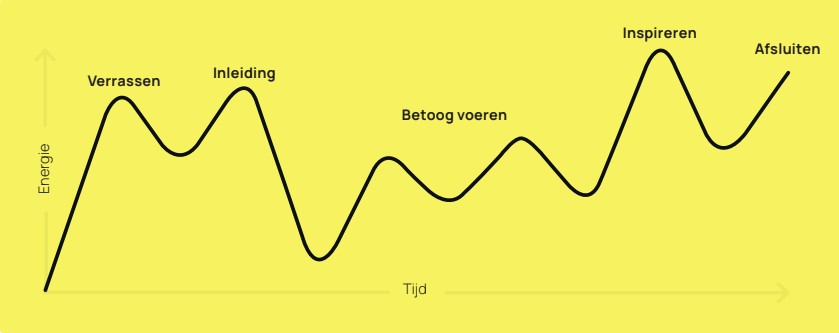
Speak to Inspire has developed a unique method to give your presentation the structure that captures and holds the attention of your audience.
In addition to a structure that allows you to manage the energy of your audience, create tension and focus, it is very important that you know how to connect with your audience. By making your story personal and by remembering to whom you are speaking and to connect with their perception.
With storytelling techniques, you can let your message capture the imagination and speak to the senses. Abstract information can then be made tangible, allowing your audience to identify with it and more quickly internalize what you want to convey.
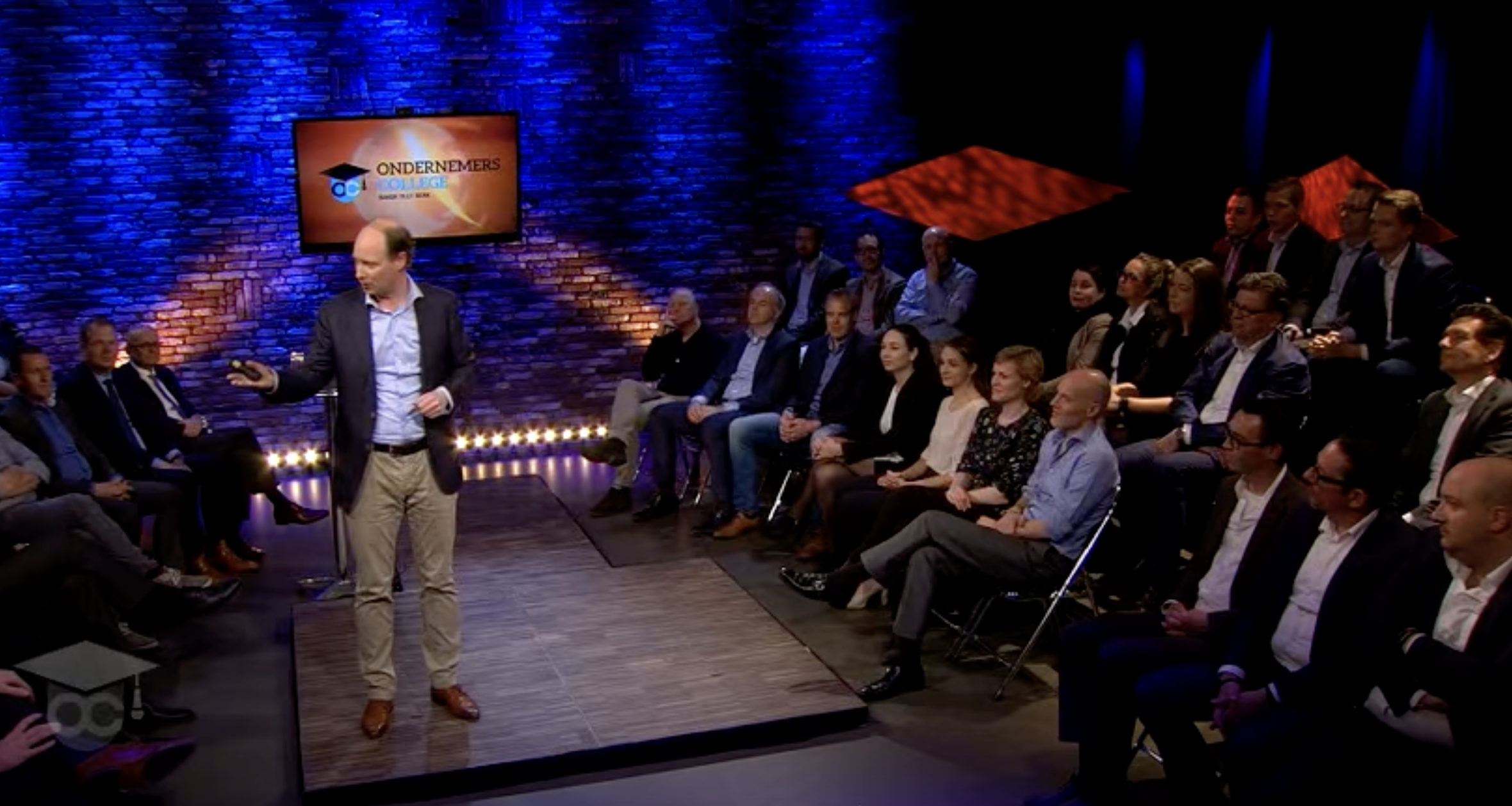
We believe there is only one way to learn how to present: by doing it !
With experiential exercises, speakers discover their own style.
The interventions of the trainer or coach are aimed at further discovering one's own capabilities and experiencing what different behavior does to oneself and the audience.
With specially developed improvisation exercises, speakers experience how to switch between different styles and how that affects the relationship with their audience
.
Mindset
Presenting is top sport. Not least because the spotlight can bring nerves and stress. How can you deal with limiting beliefs and nerves, and be truly present in the moment? In our training and coaching we provide effective ways to do this.
Equally important is the intention with which you give your presentation. In a time of 'back-to-back meetings' and high work pressure, it is extra important to reflect on what you want to achieve and what tone and attitude are appropriate.
What it's all about in the end: do you know how to establish a successful relationship with your audience. Audiences need leadership, authenticity and connection. With our "Patterns Approach" we zoom in on the influence your coping mechanisms have on this and how you can strengthen your relationship.


Improving speaking skills demands quite a bit from speakers. You have to dare to be vulnerable, be open to feedback, look at yourself with a critical and, above all, mild eye and let go of old behaviors. You can only experiment with this in a safe environment.
In order to help speakers put what they have learned into practice, several contact moments are essential. We therefore strive for multiple sessions with a group or coachee; only then can we encourage change through awareness and make it stick.
But the proof in the eating: do, do, do is the only way to perpetuate change. So it is important for the client to stimulate (mutual) practice and doing. We like to think along how to realize this.

Menno
"Thanks for the three fun, inspiring and interesting sessions with the group! I learned a lot from them and will definitely take this into my future work."

Marisa Hut
"Yesterday we had the pitches from the first eight groups. These were all great and there are some natural talents among them! We immediately saw what the training has done, good structure, good visuals, brilliant examples, images / words showed on paper, good stories, every single one of them were very nice and good. People also gained the confidence to pitch through the training, this was very evident. We sat proudly watching each pitch!"
Tjebbe Hoogcarspel
"The coaching has done a lot for me. I really experienced this as incredibly fun, educational and inspiring! The cooperation with Huib was more than top and really got a lot out of this and also definitely had fun. So the perfect choice for me."


 +31 20 4204068

 info@speaktoinspire.nl